
- Home
- Products
- Nutriking Crop Nutrition
- Water Soluble Fertilizer
- water soluble fertilizer 20-20-20+TE
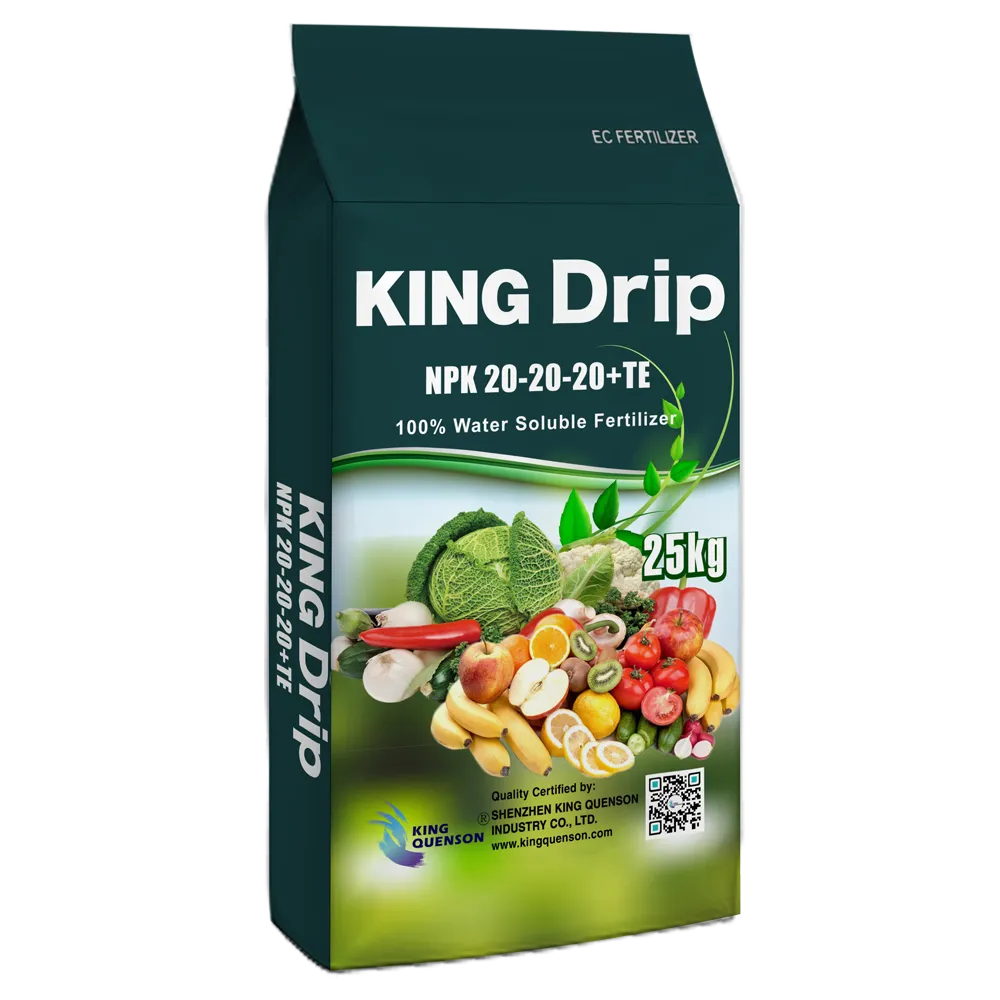
water soluble fertilizer 20-20-20+TE
Classification:
Nutriking
Trade Name:
King Drip 20-20-20+TE
Product Introduction:
King Drip 20-20-20+TE is a 100% water-soluble formula suitable for drip irrigation, flushing, foliar spraying, and other application methods. The balanced supply of Ammonium Nitrogen and Nitrate meets the nutritional needs of roots, stems, and leaves, prevents excessive vegetative growth, and improves both yield and quality. The product is chloride-free and sodium-free, making it suitable for chloride-sensitive crops.
Key Features:
1. Fully Water-Soluble & System-Safe
Fully water soluble
No clogging in fertigation systems
2. High-Quality Raw Materials
Made from high-quality MKP and Potassium Nitrate
Instant-dissolving nitrate nitrogen for fast growth and ripening
3. Chelated Micronutrient Package
Contains Boron, Zinc, Iron, Manganese
Polyamino-acid chelation enhances nutrient absorption and photosynthetic efficiency
4. Flowering & Fruiting Support
Added nutrients for flowering and fruiting
Promotes flower bud differentiation and increases fruit set rate
Chemical Composition:
| Component | Content |
|---|---|
| Total Nitrogen (N) | 20% |
| Ammonium Nitrogen (NH4-N) | 4% |
| Nitrate Nitrogen (NO₃-N) | 5% |
| Ureic Nitrogen (NH2-N) | 11% |
| Neutral Ammonium Citrate and Water Soluble (P₂O₅) | 20% |
| Water Soluble Phosphorus Pentoxide (P₂O₅) | 20% |
| Water Soluble Potassium Oxide (K₂O) | 20% |
| Water Soluble Boron (B) | 0.05% |
| Water Soluble Copper (Cu) chelated with EDTA | 0.01% |
| Water Soluble Iron (Fe) chelated with EDTA | 0.05% |
| Water Soluble Manganese (Mn) chelated with EDTA | 0.01% |
| Water Soluble Molybdenum (Mo) | 0.001% |
| Water Soluble Zinc (Zn) chelated with EDTA | 0.05% |
| pH range for (Cu,Fe,Mn,Zn) | 4-9 |
Usages and Recommendations:
| CROPS | APPLICATION TIME | FOLIAR (g/100 L water) | DRIP APPLICATION (kg/ha) |
|---|---|---|---|
| Open Field Vegetables: Pumpkin, Okra, Pepper, Broccoli, Brussels Sprout, Dill, Tomato, Artichoke, Carrot, Cucumber, Spinach, Cabbage, Squash, Celery, Watermelon, Melon, Asparagus, Lettuce, Parsley, Mint, Potato, Eggplant, Swiss Chard, Leek, Arugula, Garlic, Onion, Turnip, Sweet Potato, Celeriac, Radish, Jerusalem Artichoke |
Apply when plants are 3–4 weeks old; repeat 3–4 times at 7–10-day intervals. | 150–250 | 5–15 |
| Greenhouse & Covered Vegetables: Pumpkin, Pepper, Tomato, Cucumber, Squash, Watermelon, Melon, Lettuce, Eggplant |
Apply when plants reach the 4–5 true-leaf stage; repeat 4–5 times at 7–10-day intervals. | 100–200 | 5–15 |
| Cereals: Barley, Wheat, Rye, Corn, Rice, Oat |
Apply during the tillering stage; additional 1–2 applications may be made during the flag-leaf stage. | 250–300 | — |
| Industrial Crops: Tea, Poppy, Hemp, Flax, Cotton, Sugar Beet, Tobacco |
Start from early vegetative growth; repeat 3–4 times at 10–15-day intervals. | 200–300 | 5–15 |
| Oilseed Crops: Sunflower, Soybean, Sesame, Peanut, Olive |
Apply 3–4 times during the active growth period. | 100–250 | 5–15 |
| Legumes: Fava Bean, Red Kidney Bean, Pea, Cowpea, Common Bean, Lentil, Chickpea |
Apply when plants are 3–4 weeks old; repeat 3–4 times at 7–10-day intervals. | 200–300 | 5–15 |
| Fruit Trees: Raspberry, Pistachio, Pear, Avocado, Quince, Almond, Blackberry, Walnut, Strawberry, Apple, Plum, Hazelnut, Grapefruit, Fig, Apricot, Chestnut, Cherry, Kiwi, Lemon, Mandarin, Banana, Pomegranate, Citrus, Orange, Peach, Grape |
First application before flowering; 1–2 additional applications every 14 days as needed. Final application should be made before harvest. | 150–250 | 5–15 |
| Vineyards | First before flowering, second after fruit set, third 15 days later. | 250–300 | 5–15 |
| Green Areas (Lawns, Turf) | Foliar application repeated every 3–4 weeks for maintenance. | 200–300 | — |
| Cut Flowers | Apply 2–3 times at 3–4-week intervals during the growth period. | 75–150 | — |
