

Introduction
Ionic channel revolution: King Quenson’s trailblazing strategies for sustainable soil remediation
−− King’s Landing series: Simplifying sustainable agricultural farming
While farmers in Delingha, Qinghai, watched in despair as germination rates plummeted below 16% in severely saline-alkali soil with a pH of 8.42 and a salt content of 19.6‰, the research team at King Quenson was busy unlocking the secrets of soil remediation at their experimental facility. The sight of highland barley shoots breaking through the white salt crust, the stark contrast between the lifeless seedlings in the control plot and the vibrant greenery in the treated area, and the impressive biomass of 8.0 g/10 plants in the treated group indicated by an electronic scale—a 186% increase over the control group’s 2.8 g/ 10 plants, underscored that this transformation represents a breakthrough that goes well beyond mere technological advancement. “Traditional freshwater leaching requires 1,500 tons of water per mu and has a salt return rate as high as 90%,” noted Dr. Ming Zhou, the chief scientist of King’s Landing at King Quenson, pointing to the highland barley with a germination rate of over 85%. “Instead of combating salt with water, we are having a dialogue with ions.”
In the context of global agriculture grappling with worsening soil degradation, salinization, and the challenges posed by continuous cropping, King Quenson has introduced a groundbreaking soil management solution through the use of interdisciplinary material innovation. Building upon research from Tsinghua University that focused on using new agricultural materials, King Quenson combines materials science with plant nutrition to create a product matrix, centered around King’s Landing TerraBoost. This approach synergistically improves the physical structure of the soil, enhances nutrient efficiency, and boosts crop resistance to stress.


Tsinghua technological core: Innovative material technology based upon three-tier synergistic management at the molecular level
Just as rehabilitating a paralyzed transport network is complex, a comprehensive 13-year study by scientists at Tsinghua University’s State Key Laboratory has determined that soil degradation represents a systemic failure. The researchers describe this failure as the “paralysis of ionic exchange highways, depletion of electrical double layers of soil colloids, and disruption of microbial logistics.” Traditional organic fertilizers are akin to inefficient donkey caravans—slow and cumbersome—failing to satisfy the demands of modern agriculture for rapid soil ion exchange channels.
However, the King’s Landing system offers a synergistic approach to soil management through the following innovations:
Molecular repair layer: Revolutionizing ionic channels – restarting soil "charging stations"
Utilizing novel materials featuring electron-delocalized surfaces with high surface electron density to substantially increase the Zeta potential of soil colloids, effectively reactivating the soil’s cation exchange capacity. This advancement rapidly creates channels that reduce salt and discharge alkali, leading to a 30–50% increase in crop absorption of fertilizer nutrients and water, compared to conventional methods. To visualize this, think of soil colloids as rechargeable batteries: The Zeta potential is similar to the remaining charge. By boosting the “soil battery charge” with these new materials, key bottlenecks in cation exchange are eliminated, promoting the transforming of pathways from “rural roads” into “highways. “
Using King’s Landing TerraBoost can lower the oxidation-reduction potential of fertilizer solutions, acting like a “battery repair agent.” This process effectively applies an anti-corrosion armor to the roots, which reduces root damage and significantly minimizes fertilizer-induced injuries during crop fertilization, all while enhancing fertilizer utilization efficiency.


Structural reconstruction layer: Rapidly reshaping soil colloid structure – intelligent gel "Soil LEGO"
Advanced polymer gel technology enables the complete physical restoration of soil. These intelligent gels act like self-assembling LEGO blocks, releasing “structural repair robots” upon hydration. Extensive field trials have demonstrated that King’s Landing TerraBoost can restore soil aggregate structure within 24 hours without the need for mechanical tillage or deep tillage. This process constructs a healthy “module soil skeleton,” resolves compaction, forms a lasting anti-salinization barrier, and continuously revitalizes rhizosphere respiration. When combined with traditional water-soluble fertilizers, microbial agents, and biostimulants, it creates an optimal “soil warehouse” built on the strong “modular soil skeleton,” providing sustained energy and nutrients for crop growth.


Biological activation layer: Dramatically enhancing carbon assimilation in photosynthesis – crop "immune vaccine"
Traditional views link plant diseases to “low plant immunity,” but our research has revealed that osmotic imbalance is often the tipping point. When cells “dehydrate and convulse” due to salt or drought stress, their defense mechanisms can completely fail. This long-standing issue originates from inefficient ionic channels.
Scientists at Tsinghua University have bypassed the complexities of traditional compound R&D by turning to materials science and developing ionic channel “stabilizers” and decoded immune gene “activation codes.” King’s Landing has launched a technological revolution that activates the photosynthetic “green engine” of crops. This innovation rapidly balances osmotic pressure, enhances tolerance to high/low temperatures, strengthens immune responses, and upregulates resistance gene expression. When cucumber apical buds regain disease resistance in osmotically stressed soil, it becomes clear that healing plants requires not just pathogen-killing toxins, but the wisdom that restores the rhythm of life.
King's Landing product matrix: Six engines for soil life systems


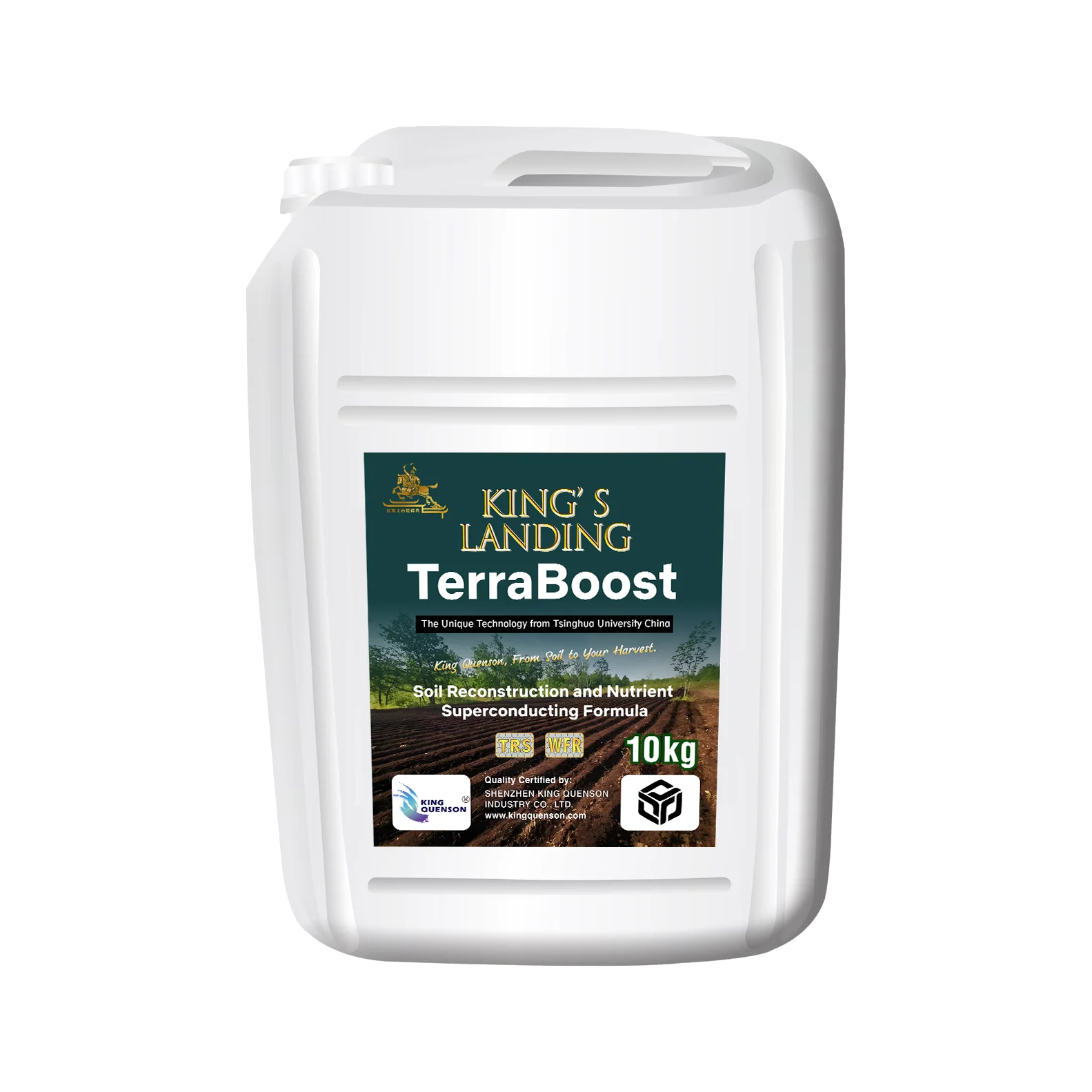
TerraBoost
quickly restructures soil aggregates, providing instant decompaction and aeration for compacted soils within a single day. It also promotes vigorous horizontal and vertical root growth in only 3 to 7 days, effectively preventing the premature aging of roots. TerraBoost offers strong and broad-spectrum resilience against soil and climate stresses, including salinity, alkalinity, high temperatures, and cold stress. Additionally, it accelerates uniform and rapid fruit enlargement, making it an ideal non-regulatory enhancer for fruit swelling during the bulking stage.
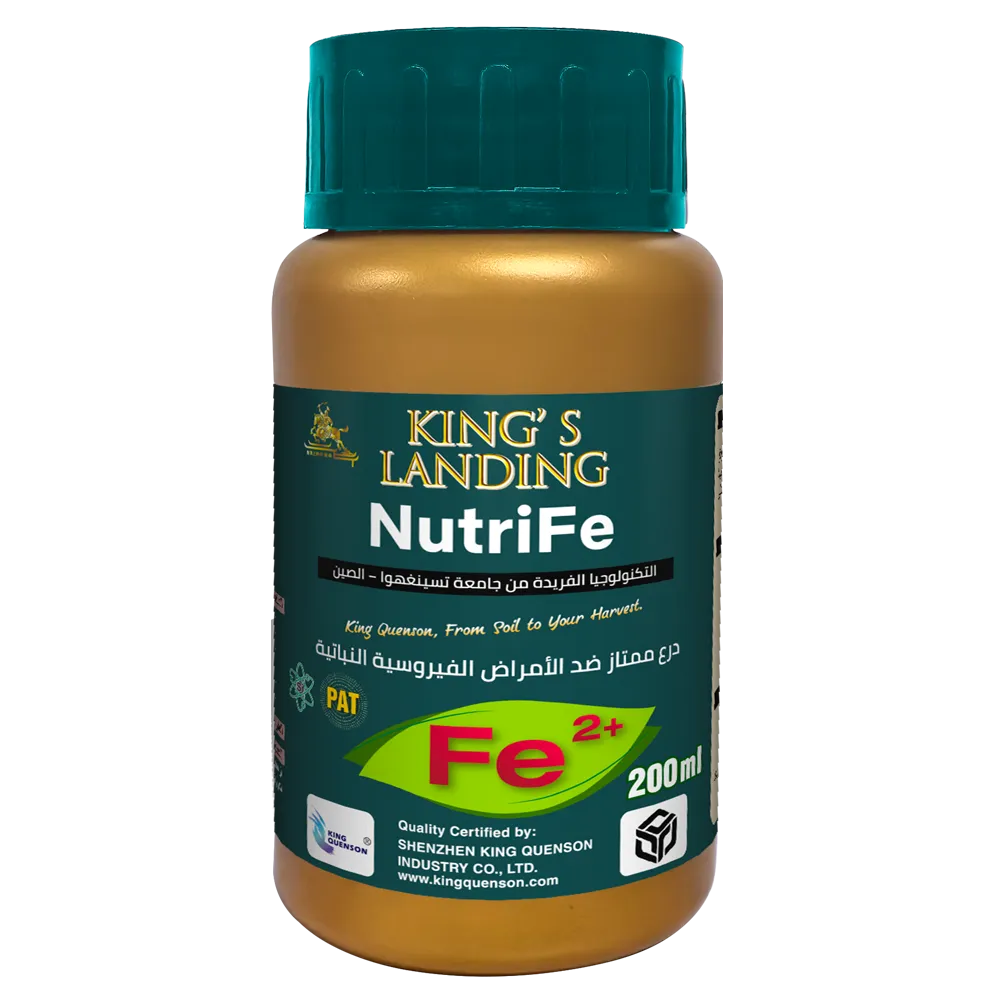
NutriFe
Boosts crop stress resistance by creating a photosynthetic immune shield. Additionally, it quickly promotes the development of physical defense membranes in silicified leaf cells. Its conjugated π-system materials materials rapidly disrupt viral replication and deactivate viruses. NutriFe also swiftly repairs crop immune systems and enhances the expression of functional genes. Also, it effectively balances osmotic pressure, improving tolerance to both high and low temperature stresses. Further, it employs a safer multi-element chelation technology for Fe²⁺ ions and acidic silicon ions.
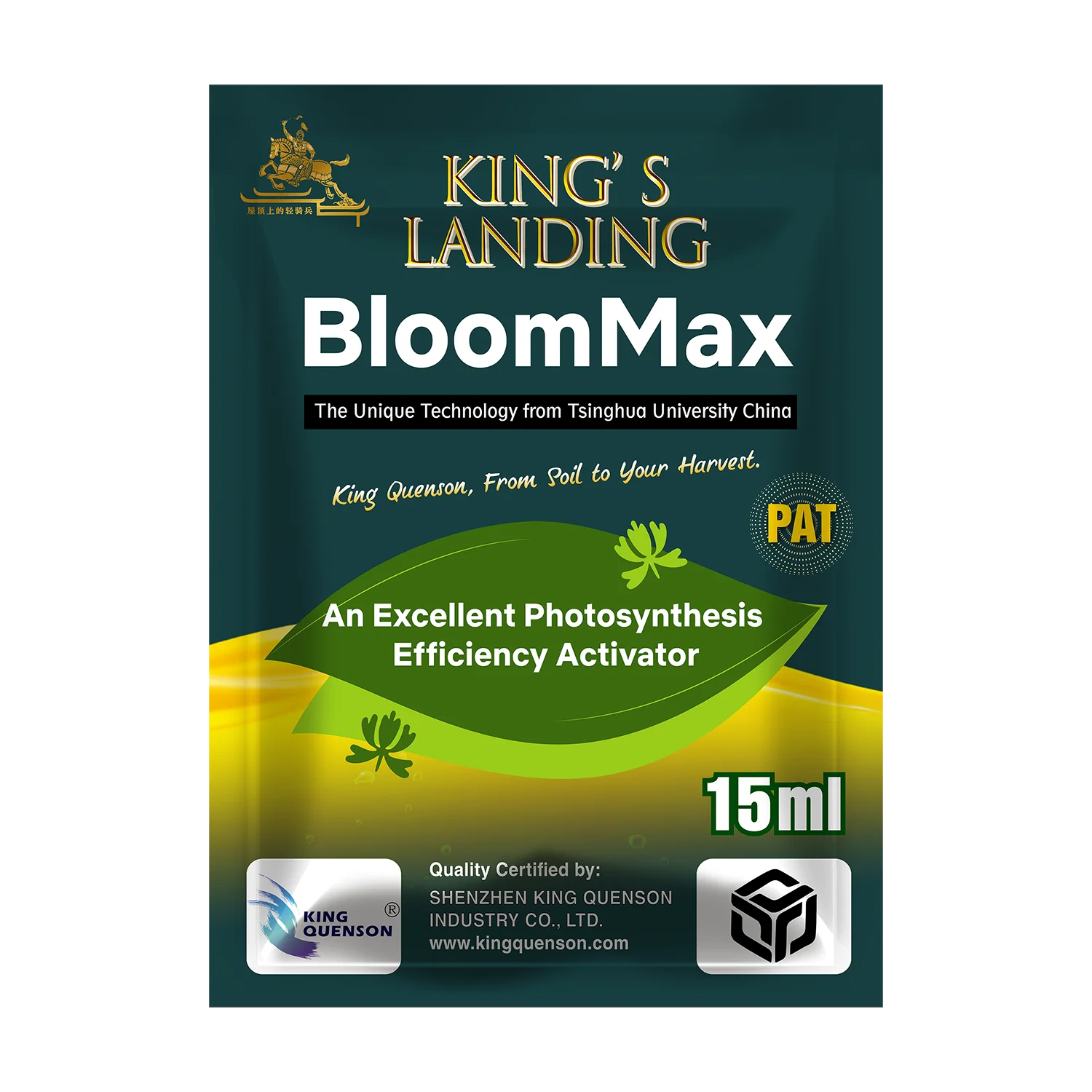
BloomMax
Excels at boosting the photosynthetic rate in low-temperature and low-light conditions. It accelerates cytoplasmic streaming to promote rapid crop growth and inhibits chlorophyll degradation, delaying premature senescence. Additionally, BloomMax quickly balances cellular osmotic pressure, helping crops resist environmental stress. It also enhances crop’s antioxidant capacity, reducing peroxidative damage and preventing photosynthetic inhibition. These capabilities position BloomMax as a comprehensive master regulator of photosynthetic capacity.
SoilVitalizer
Utilizes graphene and silicon-based anionic mineral-modified materials, boasting the highest cation exchange capacity in the industry. It achieves sustained bidirectional pH balancing in strongly acidic and alkaline soils, such as raising acidic soil from pH 4.5 to 6.0 within a month, or lowering alkaline soil from pH 8.43 to 7.5 within the same timeframe. This unique product enables a slow release of mineral-derived fulvic acid over 30 to 60 days, continuously maintaining healthy ionic exchange in the rhizosphere.
RootRevive
Features vertically penetrating organic carbon, with 150 kg per hectare effectively replacing 3 tons of traditional organic fertilizer. This promotes vertical root growth and facilitates 3D root establishment.
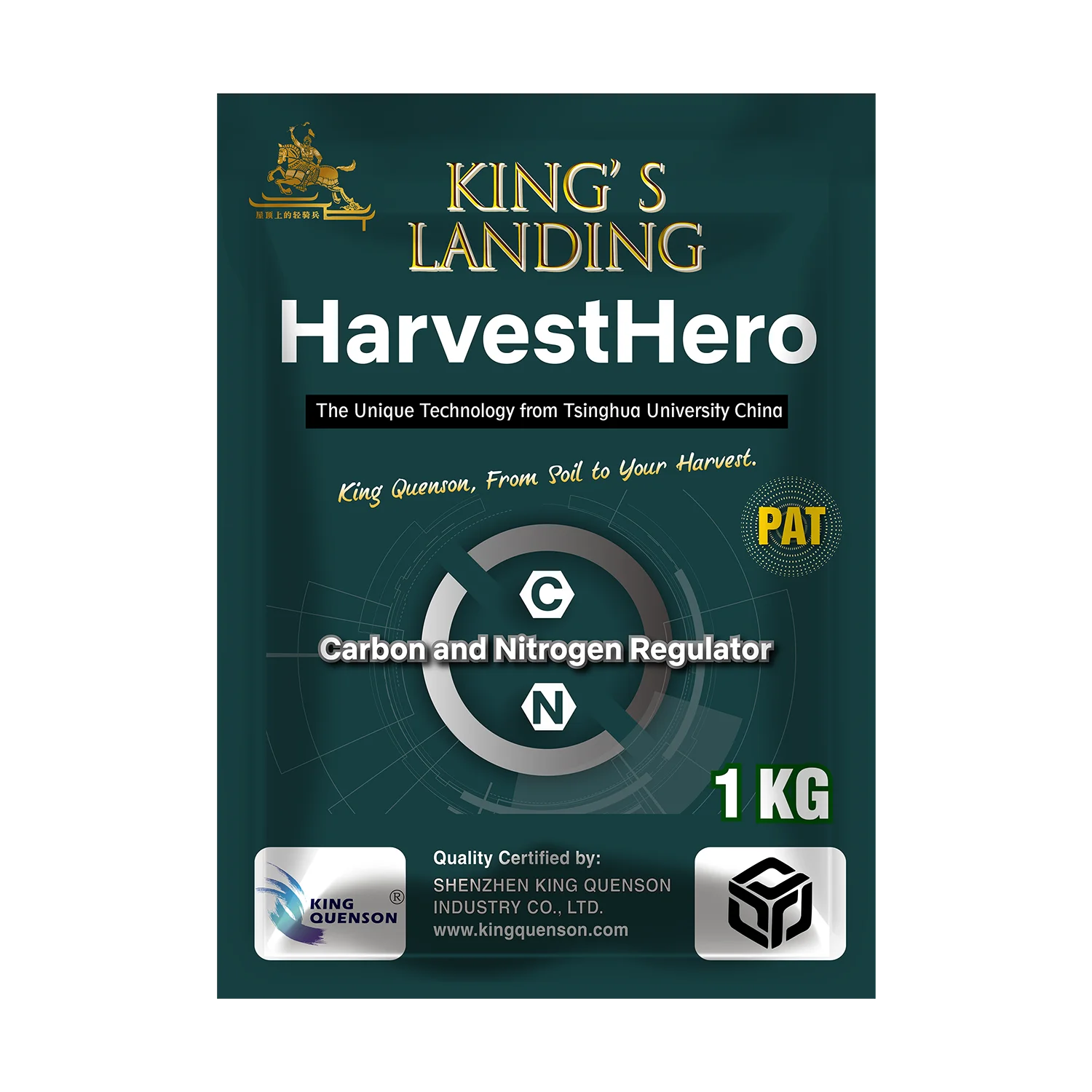
HarvestHero
Integrates high-efficiency photosynthesis technology, acting as the master regulator for carbon and nitrogen in crops.
Field validation: Solutions for enhancing soil health ecosystems and boosting multi-crop yields
By leveraging a six-dimensional synergistic approach with novel material technology across three tiers, the King’s Landing series products achieve remarkable results without the need for regulators, pesticides, or non-recommended agricultural compounds. They effectively tackle challenges that traditional agricultural materials cannot solve, such as reducing rhizosphere nematode infection rates, enabling impressive recovery of virus-infected plants, inducing rapid flowering with pure nutrition, and optimizing water and fertilizer utilization. Consequently, the King’s Landing series products provide adaptive solutions for yield enhancement across a diverse range of crops.

Co-Cultivating among human beings: Tsinghua Technology’s Global Mission
As electronic scales indicated a remarkable 186% increase in biomass for highland barley grown in extremely challenging saline-alkali soil, King Quenson Group has embarked on a grander vision:
Co-building a Global Soil Hospital, to deliver closed-loop solutions that include soil testing, analysis, treatment, and sustainable health synergy between crops and soil;
Establishing remediation stations for degraded farmlands in 12 countries;
Offering tailored remediation plans for countries along the Belt and Road;
Empowering developing countries to overcome resource constraints.
“The true value of soil remediation,” said a yield evaluation expert from Qinghai Province’s Organic Agricultural Products Promotion and Service Center, while cradling a highland barley seedling in Delingha, “lies in restoring the ability of the most fragile farmlands to nourish humanity.”
“We are redefining soil health standards through the lens of materials science,” emphasized Dr. Ming Zhou. “Over the next three years, we will launch soil microbiome activation technology to restore productivity to 90% of degraded farmlands.”